The Program
How The Life School works
Ages 13-19. Six years. While they’re still in school.
This isn’t a replacement for traditional education. It’s what runs parallel to it — the curriculum schools don’t teach.
A hybrid model:
01
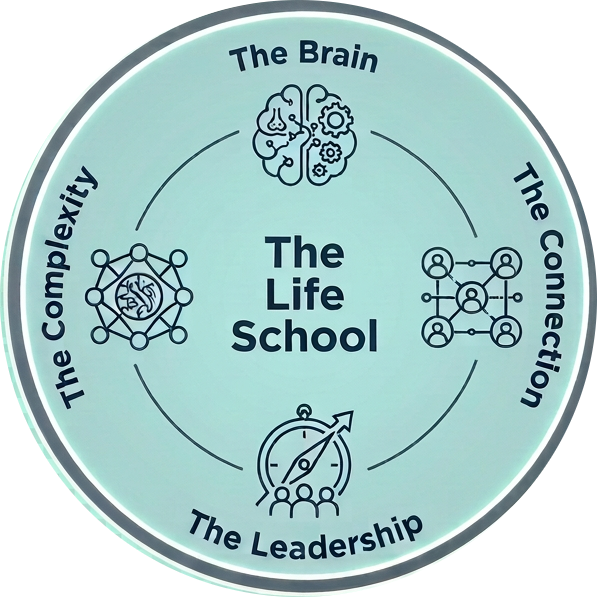
Foundational lectures on the science that matters:
How the brain develops from ages 13-25 and why it shapes every decision they’ll make
The neuroscience of connection (work on how relationships shape our brains)
The psychology of happiness and purpose
Complexity science and systems thinking — how to navigate uncertainty without needing all the answers
02
Experiential learning for the skills that can’t be taught in lectures:
Building meaningful relationships and practicing collaboration
Discovering purpose through real-world exploration
Integrating connection and achievement, not choosing between them
Leading through complexity and uncertainty
Evidence-based. Research-backed. Designed by people who’ve lived what happens when teenagers don’t learn this.
This is a core curriculum, not a soft skills add-on. It runs alongside traditional education for six years, teaching what schools don’t: how to build a meaningful life in an uncertain world. Ages 13-19 — before the detour, before the crisis, before they internalize the lie that their worth must be earned through performance.
References
[1] Mineo, L. (2017). “Good genes are nice, but joy is better.” Harvard Gazette.
[2] “Midlife Crisis: Symptoms, Causes, and Coping.” HelpGuide.org.
[3] UCL News (2026). “High academic pressure linked to teen depression and self-harm risk.”
[4] Zhao, J., et al. (2023). “Academic Pressure and Adolescent Loneliness.” Psychology Research and Behavior Management.
 The Life School